Tablets don't usually have particularly impressive optical sensors; in that respect, they're still a few steps behind smartphones, which implement high-quality and even multi-sensor cameras. However, for photography enthusiasts, there are tablets with good cameras on the market. You just have to look around a bit to find them. We're here to help you with the search and the choice…
Best tablets with a good camera


It's not easy to determine which tablet has the best camera. The reason is that when discussing sensors, many people simply focus on the megapixel count , but sometimes certain designs demonstrate that less is more. Generally, more megapixels means better, but this isn't a reliable benchmark for comparing different models. For example, a tablet with a 13MP camera might seem good, while another with an 8MP sensor might initially appear inferior. However, if the second tablet has additional sensors, such as a quad-camera setup, then it will outperform the 13MP one.
To keep things simple, here's a selection of the brands and models we consider the best if you're looking for a better camera:
Apple iPad Pro
This tablet is one of the most exclusive and expensive, but also one of the best. If you're looking for excellence, then the iPad Pro might be the tablet for you. It could even be a way to have a cheaper Apple laptop than the MacBook Pro, since this mobile device shares some features with them, and if you add the external MagicKey, you'll have a fantastic 2-in-1.
Unlike iPads, the Pro features the same chip as MacBooks, the M2 . This powerful ARM-based SoC boasts a microarchitecture designed by Apple to deliver unparalleled performance and efficiency from its CPU cores. It also includes a powerful GPU based on Imagination Technologies' PowerVR architecture, as well as NPUs to accelerate AI applications. In short, a tablet with laptop-like performance in your hands.
On the other hand, it features an 11-inch Liquid Retina display with fantastic resolution, image quality, and color gamut thanks to True Tone and ProMotion technologies. Beneath the screen lies a battery capable of delivering one of the best battery lives on the market, allowing you to enjoy your tablet for up to 10 hours without needing to recharge. It also boasts Wi-Fi and Bluetooth connectivity, and a multi-sensor front camera system with a 12MP wide-angle lens and a 10MP ultra-wide-angle lens, as well as a LiDAR sensor to enhance the AR experience.
Lenovo Tab P12 Pro
This Chinese tablet offers fantastic value for money, perfect for those looking for something good, attractive, and affordable. It comes equipped with a large 12.6” screen and a stunning 2K resolution with Dolby Vision. It also runs Android 11 with over-the-air (OTA) updates to ensure you have access to the latest features and security patches.
It includes Bluetooth and Wi-Fi connectivity. As for the rest of the hardware, it impresses with its Qualcomm Snapdragon 870G processor with eight Kryo cores and a powerful integrated Adreno GPU for graphics. Regarding memory, it comes equipped with 6 GB of high-performance LPDDR4x RAM and 128 GB of internal flash storage.
It boasts a fantastic design and a battery that can last up to 15 hours on a full charge thanks to its 8600 mAh capacity. It features a side-mounted fingerprint sensor, and its front camera is a dual 8 MP full-frame setup, while the rear camera is a 13 MP dual-lens setup with autofocus and a 5 MP full-lens setup. Its JBL speakers with Dolby Atmos support and two integrated microphones are impressive.
Samsung Galaxy Tab S7
Another tablet with Android 10 (upgradable) and a better camera is the Galaxy Tab S7, featuring a high-quality 13 MP rear camera and an 8 MP front camera. It includes speakers compatible with Dolby Atmos surround sound and a quad AKG driver. This, along with its 11-inch touchscreen with QHD resolution and a 120 Hz refresh rate, makes this tablet truly powerful for multimedia use for many hours thanks to its 8000 mAh battery.
It includes a Qualcomm Snapdragon 865+ chip , one of the most powerful available, offering 10% more performance than the 865. It boasts a high clock speed, with eight Kryo 585 Prime cores that can reach up to 3.1 GHz, and a powerful Adreno 650 GPU for rendering graphics up to 10% faster than its predecessor, achieving up to 144 frames per second. To complement this, it also includes 6 GB of RAM and 128 GB of internal storage.
Apple iPad Pro 11 "
This iPad is slightly cheaper than the 2021 Pro version, but it still offers fantastic reliability and durability. It features a highly optimized and responsive iPadOS 14 operating system with available updates. It also offers Wi-Fi connectivity and the option to use advanced 4G LTE.
Very good stereo sound quality, 10.9 ”Liquid Retina display with high pixel density and True Tone technology for superior color gamut, quality integrated microphone, and Touch ID for authentication.
It comes with a powerful Apple A14 Bionic chip , featuring a Neural Engine for AI-powered acceleration. The base configuration has 64GB of internal storage, though it can be upgraded to 256GB. This tablet's battery will also last for many hours thanks to its capacity and optimization. And, as for the camera, it boasts one of the best sensors available, with a 12MP rear camera and a 7MP front camera for FaceTime HD.
Tablet brands with good cameras
Apple


Apple is the world's most valuable technology company . This Cupertino-based company has distinguished itself through its innovation and design in devices geared towards a more exclusive audience. They have also recently entered the tablet market with their iPads, in fact sparking the current tablet boom.
They offer one of the best tablets, meticulously crafting every detail to create a device with exceptional performance, energy efficiency, design, quality, security, and reliability. For example, this attention to detail is evident in the care taken with their sensors and cameras , which are among the highest quality on the market, and one of the few that include IR filters to enhance image quality.
Samsung
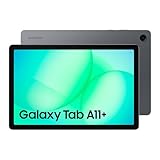


Apple's biggest rival is Samsung. This South Korean multinational has become a leader in electronics and semiconductor technology. It's one of the most important companies in the world, and that's reflected in its products. It has even manufactured for Apple. Furthermore, this Asian giant is one of the most experienced companies in the sector and boasts highly innovative ideas.
Their tablets, from the Galaxy Tab series, have consistently been among the highest-rated. But unlike Apple, they offer a wider range of series to cater to more users, including affordable options for those who can't afford the most premium products. Among some of the high-end models, you'll also find tablets with truly incredible cameras.
Huawei


The Chinese company Huawei has also been making a strong impact in recent years. Starting with devices offering fantastic value for money, it has gone on to lead in some sectors, such as 5G technology. Its products, including its competitively priced tablet models, leave users quite satisfied.
Among them are some that stand out for their cameras, as well as for many other qualities . Ultimately, once you try one of these, you'll stop associating "Chinese" with something cheap, low-quality, or lacking in performance.
The tablet with the best camera: iPad Pro

The winner of all the best camera tablets is the iPad Pro , and it's from Apple, as you might expect. And it doesn't just stand out for its camera; it also boasts a range of other features that make it a fantastic tool for professional use. These include its high-quality, color-rich 11-inch Retina display, its audio quality, its fabulous exterior design, as well as its lightness and great durability. Furthermore, this IPS panel has a resolution of 2372 x 2048 pixels and a brightness of up to 600 nits thanks to the use of LTPS (low-temperature polysilicon).
As for the front camera on this device, it uses a high-quality 7MP FaceTime HD camera for selfies and video calls. The main, or rear, camera is much more impressive . It features a multi-sensor system with two 12MP Exmor sensors manufactured by Sony, a 10MP ultra-wide sensor, a LiDAR sensor, and an LED flash. With it, you can record 4K video and take stunning photos, even in low light.
We mustn't forget the high-performance Apple M1 chip, which runs apps and games smoothly, and its updatable iPadOS operating system, which provides excellent security and ensures a stable and trouble-free experience, allowing you to focus on what matters most. As for memory, it has 6GB of RAM and a choice of 128GB to 512GB of internal storage; some versions even reach up to 2TB.
Visually, it's also appealing, with injection-molded aluminum finishes that are more pleasant to the touch and better heat dissipation, and a thickness of just 6.1 mm . That's amazing for what it packs inside, and it weighs only 469 grams. As for the screen, it's not truly edge-to-edge, but it's close, with a mere 2.99 mm bezel, resulting in a more streamlined look and utilizing 80% of the front surface for the display.
Alternatively, you might prefer a slightly cheaper option . In that case, you also have decent Android tablets with pretty good cameras available, such as those from Samsung and others mentioned earlier. However, they won't have the features and details that the iPad Pro offers.
How to choose a tablet with a good rear camera

If you're thinking about choosing a tablet with a good camera and want to have the necessary technical knowledge to compare models and make the right purchase, you should pay attention to these recommendations, which will be key to ensuring the camera performs at its best.
Number of sensors
Previously, they simply used a single sensor, one for the rear camera and one for the front camera. While the front camera still uses one in newer models, the rear camera has become more complex and advanced with multi-sensor systems that improve the captured image with greater depth of field, a wider aperture, and are also designed for augmented reality applications with LiDAR laser sensors.
If you're choosing between a single-sensor and a multi-sensor camera, don't let megapixels be your only guide; the multi-sensor is probably better. That's because the additional sensors will improve zoom, add very practical effects, and even use AI and machine learning to enhance image quality and create a better sense of background detail.
Megapixels (MP)
During the era of single-sensor cameras, megapixels were the most important unit for comparing cameras. More megapixels were always considered better , and that's still true today. But with multi-sensor systems, you can no longer rely solely on megapixels for comparisons, since adding more sensors allows you to combine the resolution of multiple sensors and achieve a better result.
Megapixels refer to the camera's capture resolution. The more megapixels , the better the photos or videos it will capture. The image will be much sharper, even when you zoom in. For example, when you take a 12MP photo and zoom in, you'll start to see those little squares (pixels) that distort the image when viewed at such a magnified size. However, if the same photo were captured by a 48MP sensor, you could zoom in and out with hardly any image distortion.
Opening

It's another term that used to be only heard in relation to professional cameras, but which has now also become relevant in mobile devices with cameras, such as tablets. Aperture is even more important than megapixels (MP), and that's because it greatly improves the quality of photos taken in low-light conditions, such as those taken at night or indoors. In fact, the aperture number indicates the amount of light the camera sensor can handle.
The larger the aperture, the more light it lets in, resulting in better photos in low-light conditions. This is indicated by the letter f followed by the aperture value (but be careful, because the smaller the number , the larger the aperture; therefore, smaller is better). For example, f/1.8 is better than f/2.2.
Flash
Virtually all modern digital cameras have an LED flash (xenon flashes exist, but they are not recommended) . This allows you to illuminate a scene in low-light conditions. Even with wide apertures, this is important, as it improves photo quality or allows you to use the flashlight mode to continuously illuminate what you want to record.
Furthermore, this capability, combined with the camera's software and other sensors, can determine when the use of flash is necessary to improve the capture and when it is not, if you have it in automatic mode.
LiDAR sensor
This type of sensor is very advanced, found in many mobile phones and tablets to enhance features like the AR experience. Its acronym stands for Light Detection and Ranging , and it's used to determine the distance between the sensor and an object or surface you're pointing at. It does this using a laser beam with excellent accuracy. Thanks to it, you can also improve photos by capturing more information about the scene, scanning objects, and more.
Camera software
Often, a camera with modest hardware can be greatly improved with good software . And if you combine good hardware with good software, the results will be impressive. Thanks to the software, you can use filters to enhance image color, refine certain aspects, reduce noise, eliminate red-eye, use different shooting modes, and simplify the process by automatically focusing the image without having to worry about manual focus.
Video recording quality

Generally, almost everything said above about taking photos also applies to video. The better the camera sensor, the better the videos it can record. Furthermore, sensors with high resolutions can capture even 4K resolution and higher frame rates , resulting in high-quality video with a smoother experience, even in scenes with fast-moving action.
On the other hand, a slow-motion camera, or SloMo , despite its name, is a very fast camera that allows you to capture many frames per second, such as 120 FPS or 240 FPS, and thus capture every tiny step in the scenes. Thanks to this, you can appreciate many more details and take those stunning slow-motion shots that everyone loves.
How to choose a tablet with a good front camera

The above also applies to the front-facing camera , although with slight differences, as most still use a single sensor. However, these cameras are becoming almost more important than the main ones, since the pandemic has increased their use for video calls to connect with friends and family, for working remotely, for online tutoring, and so on. These cameras also need a good sensor to capture the best possible image, which means having more megapixels and a good aperture.
In these types of cameras, the software becomes even more important, as it can add filters for video conferences, automatically center the frame, zoom in or out as you move, remove the background so the camera focuses only on you, preventing others from seeing what's behind you or where you are, and so on. Apple devices do this very well.
For the sensor characteristics , the same principles applied to the rear camera could be used:
- Pixels: more is better, although remember that these front cameras usually have a lower amount of MP, since they are designed for selfies or video calls where quality is not as extremely important as when taking pictures or recording video. 7 or 8 MP cameras can be quite good. Remember, though, PM isn't the only thing that matters.
- Frame rate and firing speed: another factor to take into account when choosing the graphic sensor. Determines the sensor's video capture speed and resolution. The higher the numbers the better. For example, a 720p @ 60 FPS camera is worse than a 1080p @ 60 FPS, and this in turn would be much worse than a 4K @ 120 FPS. And it is that in the last example it can be captured with 4K resolution and up to 120 frames every second. Generally, the cameras have a maximum value, for example 4K @ 120 FPS, but they give you the option from the photo app to lower that quality if you do not need as much and thus generate a file that takes up less space. For example, you could have 1080p @ 240 FPS mode.
- Sensor size: remember that this is also very important, you will find them in various sizes specified in inches ¼ ”, ⅓”, ½ ”, 1 / 1.8”, ⅔ ”, etc. The bigger the number, the better, although in many cases they are small because these mobile devices are very compact.
- Focal aperture: you know what it is if you have read the previous section, thanks to this factor the amount of light that the sensor can capture through the diaphragm is determined when the shutter opens. The lower the number the better, since more light would capture even at night. It is identified with an f and the number. For example, an f / 4 is worse than an f / 2.
- Color depth: The better this value, the less differences there will be between the colors of the captured image and the actual colors.
- Dynamic range: Thanks to this dynamic technology you can improve the lights and shadows of the image, with more vivid scenes. The technologies are HDR, HDR10, and HDR +, with the latter two being the best.
- Performance in the dark: surely you have seen the ISO value of a camera and did not know what it was. The value determines the sensitivity of the sensor to capture light. Using a high ISO will improve shooting in low light environments.
- IR filter: it is an option that few sensors implement, only the most exclusive devices. In fact, Apple is one of the few brands that uses this type of filter. Thanks to them, image quality can be improved, without infrared waves being able to affect the capture as it would occur in other sensors without this protection. In fact, you can do a test to see if the sensor of your current camera has an IR filter or not, it is as easy as using the remote control of the TV and pointing at the camera and pressing a button, in the camera app you can see a pink flash that comes out of the remote and that is captured by the camera that does not have an IR filter. If you don't see it, it's a higher-quality sensor with a filter.
- IA- Both the capture software and the AI enhancement features are very interesting. Thanks to all these technologies you can improve the image, focus automatically, follow the interlocutor if he moves, add live filters, etc. You can even use your face to unlock or perform certain functions with gestures. In this sense, Apple also stands out from the rest.